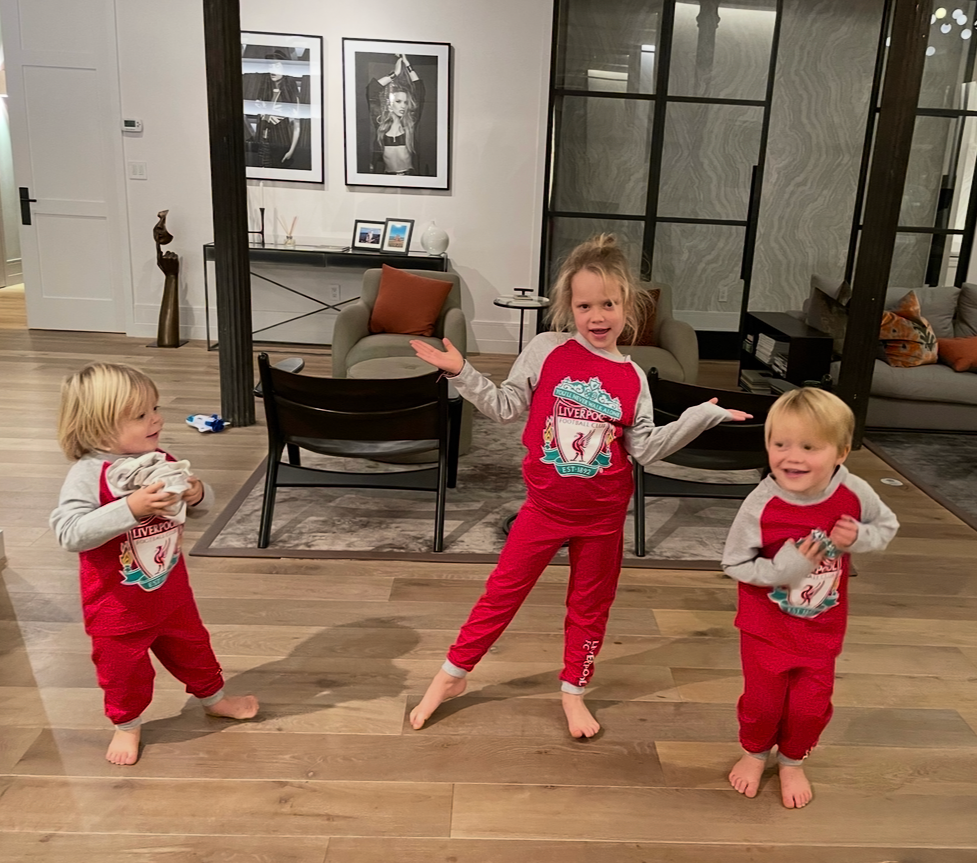
“Are you Alex?” I asked the sullen, authoritative-looking coach I suspected was the director of the girls' programme.
“I am.”
“I'm Morgan - we've been emailing about my daughter trying out for the team.”
Alex looked from me down to my daughter, who stood nervously beside me, dressed head to toe in her iconic red Liverpool kit.
In an unmistakable Scouse lilt, Alex said to my daughter: "Tell your dad that next time he brings you here, you'd better not be wearing the worst football kit in the world."
My daughter's face dropped - a mixture of confusion and embarrassment.
I knew immediately. "Oh god, you're a blue, aren't you?"
"I am," Alex replied. Dead pan.
Lulu had tried ballet, jazz, swimming, tennis - all fun, none sticky. She'd played a bit of recreational football in the neighbourhood, but nothing serious. She was six.
I'd heard of Downtown United Soccer Club (DUSC) from other parents, mostly dads of football-obsessed boys, but hadn't paid much attention. When one suggested we take Lulu to try out at their home pitch on Pier 40, nestled in the Hudson River, I thought it'd be a fun thing to try.
That first interaction with Alex doesn't look promising on paper. But anyone who knows Scouse humour will understand - despite my daughter wearing the kit of her team's fiercest rival, the absurdity wasn't lost on her. Lulu enjoyed her tryout.
When I asked her that weekend if she wanted to join, she said no. Not interested. Which surprised me - she'd loved putting on the Liverpool kit, loved kicking the ball around.
Then she overheard me telling a friend about the tryout.
"Wait - that was a tryout?"
It was.
"Did I make it?"
I hadn't heard back yet. "I don't know, honey. But it doesn't matter - you don't want to do it, right?"
"That was a tryout. Of course I want to make it."
And so began her football career. And my relationship with DUSC.
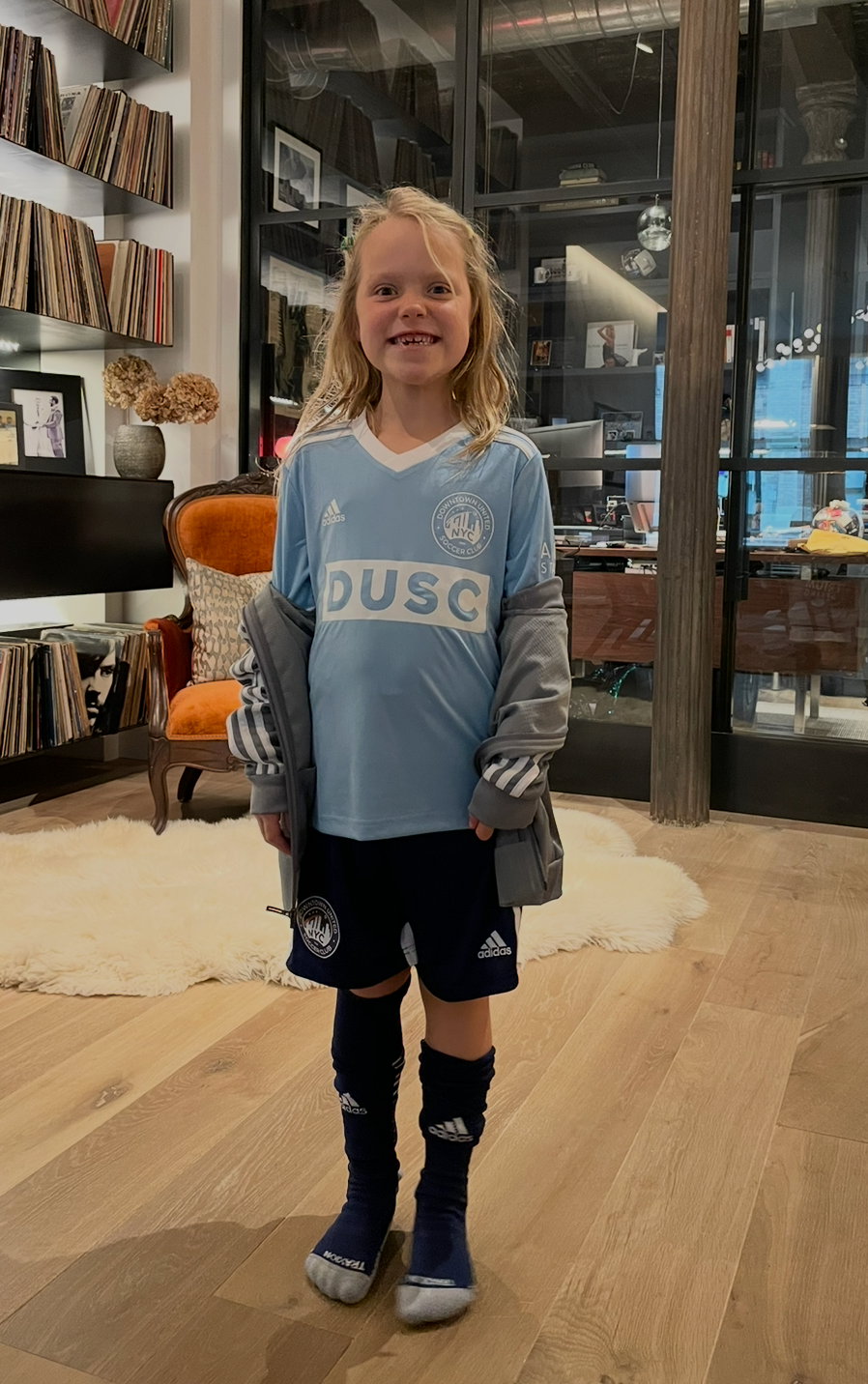
Four years later, all three of my kids were at the club. I'd watched from the sidelines long enough. I asked Coach Alex to introduce me to the Executive Director, Kevin McCarthy.
The catalyst was the annual report. I'd been skimming through the community impact stats when I hit the financials and stopped. Less than $5 million in revenue? For an organisation running elite academies, rec leagues, camps, and school programmes across the city? I genuinely didn't understand how they were making it work.
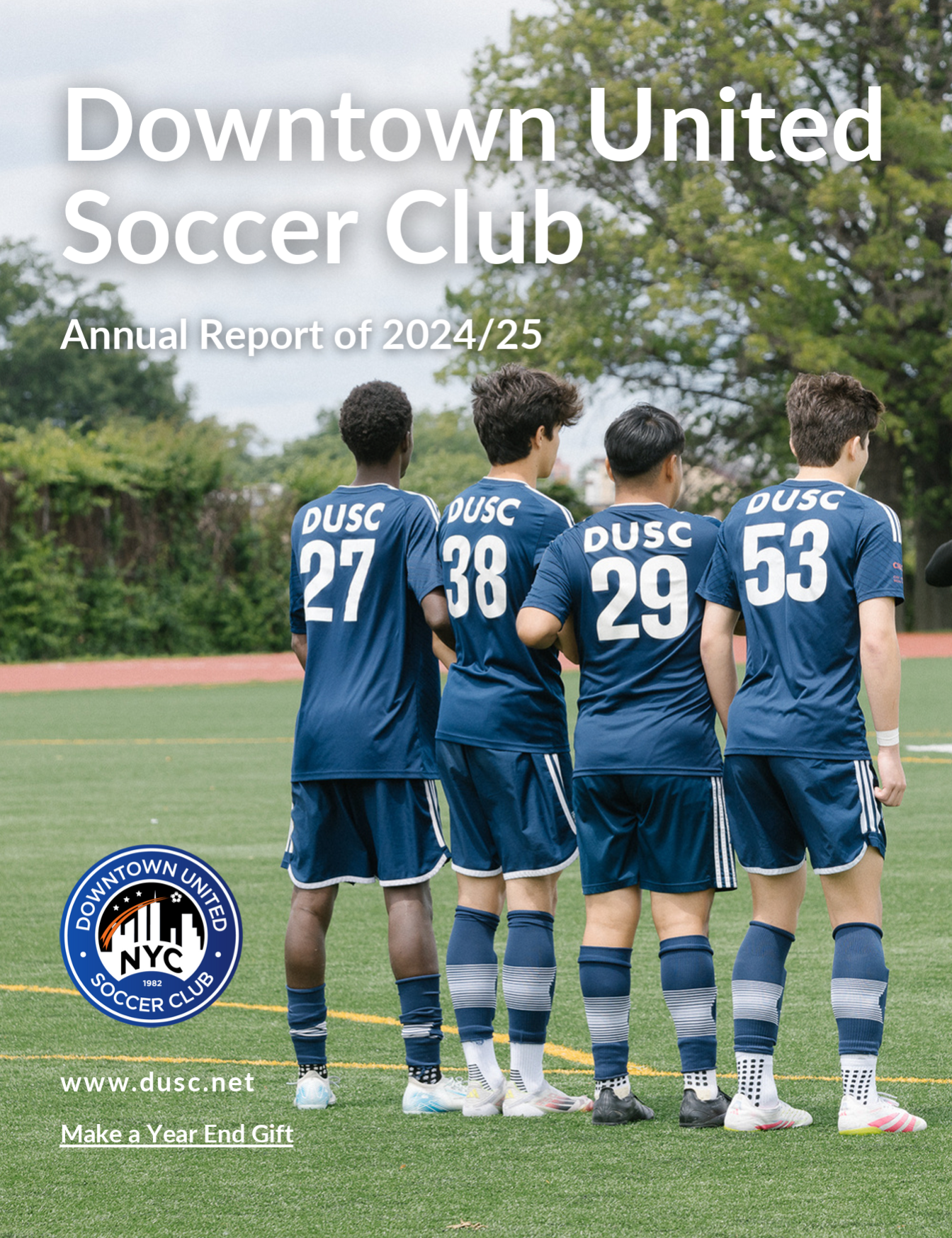
It reminded me of the startups I'd invested in and mentored - trying to do everything with nothing. When I met Kevin, I told him about my experience, the mistakes I'd seen made and made myself, and that I thought I could help.
I'd started thinking about long-term feedback loops. If my youngest stayed at the club until college, I'd be involved for another 12 years. If I could help the club get a little better each year, the compound impact could be meaningful.
Kevin started calling me his executive coach. A year later, he asked me to join the board.
Knowing the club required new uniforms every other year, I saw an opportunity. Up to that point, sponsors had come through word of mouth- an afterthought. But I looked at our 500 Academy players and thousands of rec and camp kids as living, breathing billboards. Spread across the city, wearing their kit most days, carrying their backpacks on public transport, walking down the street.
I told the board I wanted to go big. A number that made me nervous to say out loud.
Here's where we got lucky. One of our longest-serving coaches mentioned, almost in passing, that a kid on our development team was related to the founder of Chobani. I couldn't believe it.
After an initial conversation, we were connected with their Head of Partnerships. And so began six months of calls, meetings, pitch deck revisions, number crunching, and ultimately presenting to a multi-billion-dollar internationally recognised brand.
I spent over 100 hours on this. Unpaid. Evenings and weekends. There were moments - usually around hour 70, staring at another spreadsheet - when I questioned whether I'd lost the plot entirely.
But from day one, the Chobani team felt like they were on our side. They wanted to find a way to support the club. They wanted to amplify the community impact we were already having and give access to more New York City kids who might otherwise never play the beautiful game.
Trying to quantify our value was a challenge.
On one hand, we were a relatively small youth sports organisation. On the other hand, we'd recently been elevated to compete in the two highest elite leagues in the country - Girls Academy and MLS Next. Our players travelled nationally to compete. Our kids went to schools across all five boroughs and wore these uniforms every single day.
What makes DUSC different from so many American youth sports clubs is our commitment to scholarships - supporting players who couldn't otherwise afford the fees, the travel, the kit. We anchored our pitch not only on the brand exposure but on the impact we were having at every level of the game.
When it came to the final deck, I put an audacious number at the top. A moonshot. With alternative options below it, but hoping - maybe naively - for the unthinkable.
When we finally met Hamdi, the founder, he wasn't interested in spreadsheets. He trusted his team to have done the work.
His focus was on feeling the magic of the club.
Between stories from his own journey - the upstate New York dairy factory he'd taken over, the vision for community impact, the mission to make the world healthier - he wanted to hear from Kevin about the power of the game. The joy it was bringing to kids in our city.
With the same energy he'd walked in with, he left by saying he wanted to get something done. That we would get something done. His team would finalise the details.
The follow-up meeting was an agonising two weeks later. This time with his Chief Impact Officer, whom we'd come to know well, and his COO.
As they questioned us on safety protocols and compliance, I had a sense we were going to get a positive outcome.
Then the COO leaned forward. "So guys, we're in. Top level of the proposal."
I genuinely couldn't speak.
I looked at the Zoom gallery - Kevin's mouth hanging open, the rest of the team frozen mid-breath. Seven months of work. A hundred unpaid hours. A number I'd been almost embarrassed to put on paper.
They'd said yes.
I signed the agreement in Chobani's offices almost seven months to the day after our first call. The confidence from landing that deal meant we'd go on to sign two other major sponsors. Our total haul was nearly 7x what we'd achieved before.
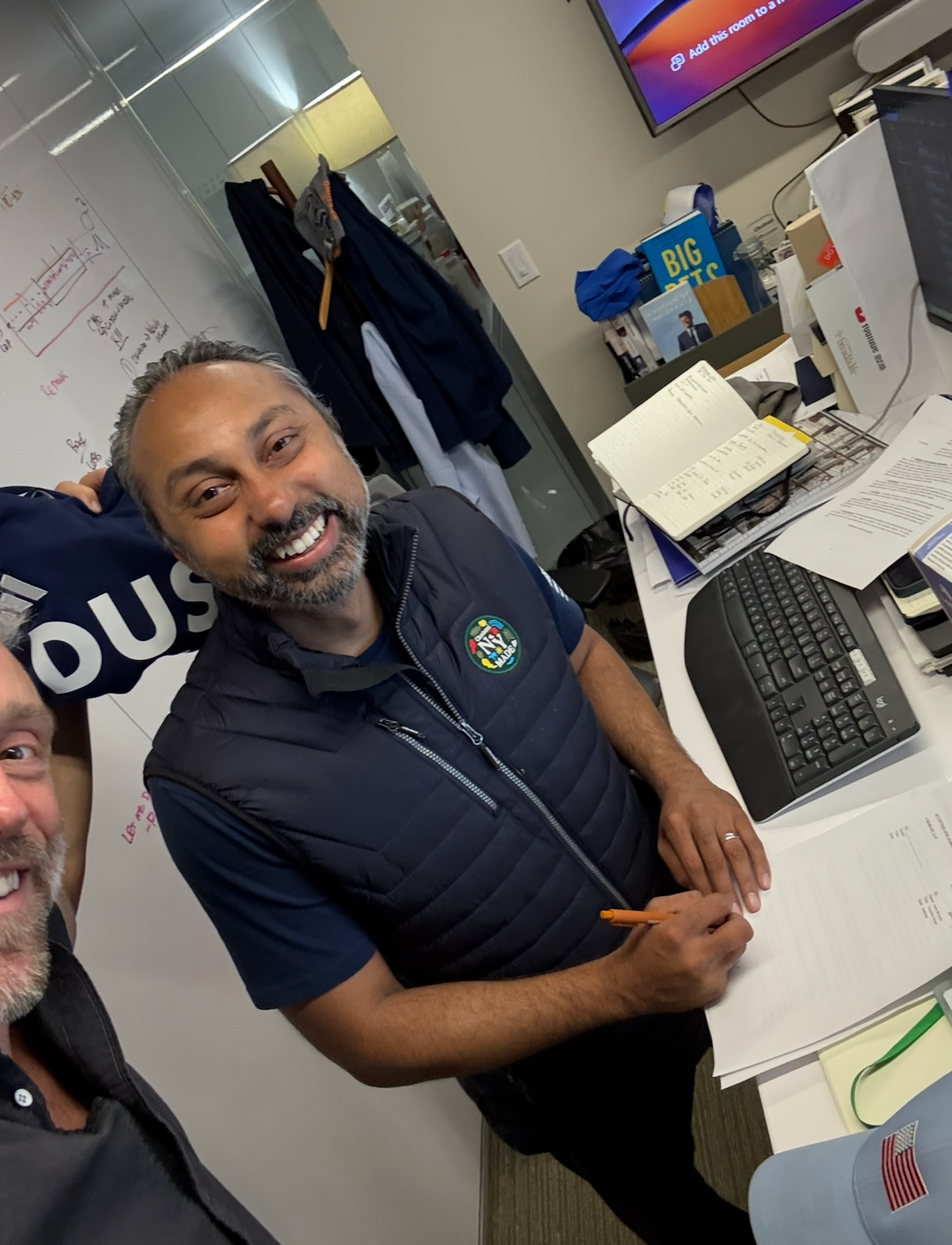
There was no champagne moment. Much like a startup, as soon as it was done, the focus shifted to the next priority in the queue.
Since signing with us, Chobani has gone on to partner with five other youth football programmes around the country, modelled on our agreement, with support from Kevin and the DUSC team in identifying the right partners. They've also become a major sponsor of US Soccer.
But here's what I keep coming back to.
That first tryout on Pier 40 - my daughter in her Liverpool kit, me having no idea what I was walking into - I couldn't have imagined it would lead here. To board meetings and pitch decks and signing contracts in trendy SoHo offices.
I showed up because my kid wanted to kick a ball. I kept showing up because I saw something worth supporting. And somewhere along the way, showing up became the whole point.
With all three of my kids at the club now, I spend more time at Pier 40 than feels reasonable. And yes - they wear the Chobani logo proudly.
Though I should note: the Liverpool loyalty hasn't wavered. Some things you don't compromise on.